Epoxy vs Polyurethane Crack Injection
Last updated
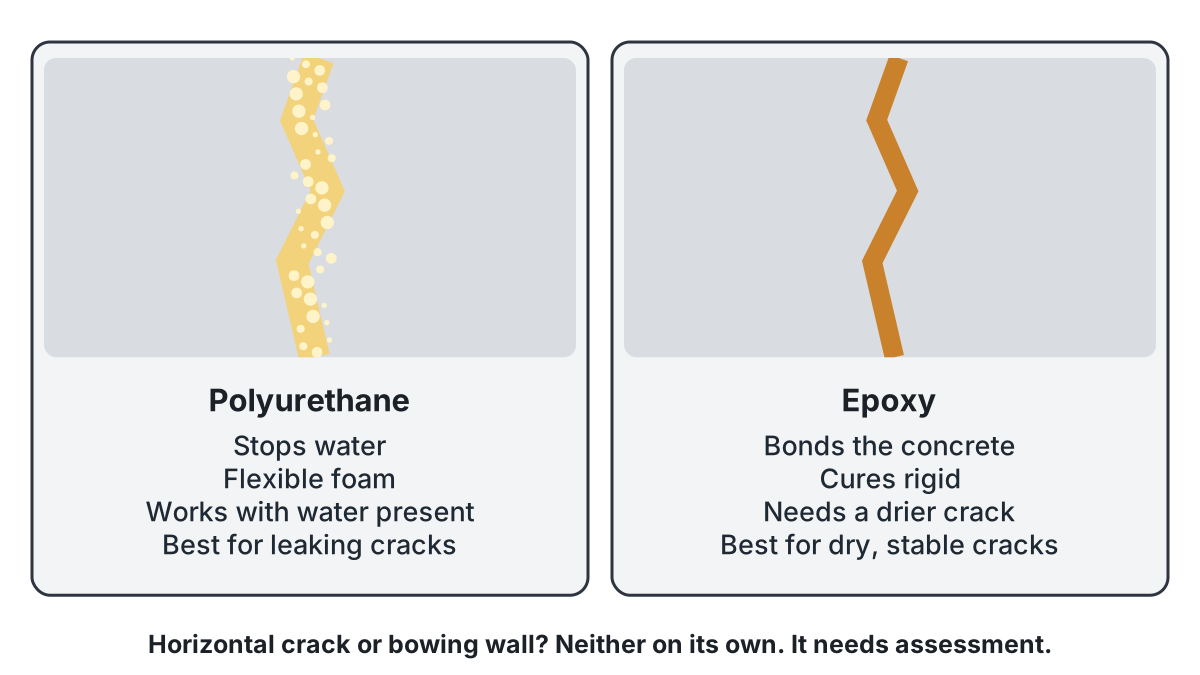
Polyurethane is the usual choice for a crack that leaks: it expands to fill the crack and stays flexible as the foundation moves a little with the seasons. Epoxy cures hard and bonds the concrete back together, so it’s used where strength matters and the crack is dry and stable. Many leaking basement cracks are polyurethane jobs.
How each works
Polyurethane is injected as a liquid. It reacts with water and expands into a foam that fills the crack through the wall’s thickness. It stays somewhat flexible after it cures.
Epoxy is injected as a liquid and cures rigid. It bonds to both sides of the crack, restoring the concrete’s continuity.
Side by side
| Polyurethane | Epoxy | |
|---|---|---|
| Main job | Stop water | Bond the concrete |
| After curing | Flexible foam | Rigid |
| Wet cracks | Works with water present | Needs a drier crack |
| Small seasonal movement | Tolerates it | Can re-crack beside the repair |
| Best for | Leaking vertical and diagonal cracks | Dry, stable cracks where strength matters |
Which one for your crack?
- It leaks in spring or after rain: polyurethane, usually.
- It’s dry, stable, and we want to restore the bond: epoxy may be the better fit.
- It’s horizontal, or the wall is bowing: neither on its own. Horizontal cracks may relate to soil pressure and are particularly concerning. The wall needs to be assessed for reinforcement.
- It’s a small hairline crack with no water: it may not need injecting at all. Small hairline cracks may not be a concern.
Edmonton conditions
Edmonton’s clay soils and freeze-thaw cycles mean foundations see seasonal stress and spring water pressure. That’s one reason flexible polyurethane is the common choice for leak repairs here.
Price
Foundation crack injection typically runs $500 to $1,500 per crack in Edmonton. We confirm the material and the price after we assess the crack. Send us a photo.